

Safety information
Section 1: Identification
Type of material: Laboratory Sample for Analysis
Description of material: Used desiccant (Activated Alumina or Molecular Sieve or mixture of Activated Alumina and Molecular Sieve or other) contaminated with used compressor lubricants (oil carryover) and other unknown pollutants from compressed air. Not necessarily, but there is possibility of presence of aromatic and polyaromatic substances due heating in compressor systems (lubricating oils, distd.). Check also Safety Data Sheet of oil used in your compressor to see if there are any other special instructions to follow. Different pollutants from air can be accumulated on desiccant (depends on location and surrounding industry). In some cases, adsorption dryers are used in specific systems and therefore other dangerous compounds may be present. In that case, also follow safety instructions for those compounds.
Sample is desiccant used in compressed air adsorption dryers.
Type of material: Laboratory Sample for Analysis
Description of material: Used desiccant (Activated Alumina or Molecular Sieve or mixture of Activated Alumina and Molecular Sieve or other) contaminated with used compressor lubricants (oil carryover) and other unknown pollutants from compressed air. Not necessarily, but there is possibility of presence of aromatic and polyaromatic substances due heating in compressor systems (lubricating oils, distd.). Check also Safety Data Sheet of oil used in your compressor to see if there are any other special instructions to follow. Different pollutants from air can be accumulated on desiccant (depends on location and surrounding industry). In some cases, adsorption dryers are used in specific systems and therefore other dangerous compounds may be present. In that case, also follow safety instructions for those compounds.
Sample is desiccant used in compressed air adsorption dryers.
Laboratory Contact:
Plurifilter d.o.o.
Obrtna cona Logatec 14
1370 Logatec
Slovenia
+386 1 750 82 82
plurifilter@irco.com
Obrtna cona Logatec 14
1370 Logatec
Slovenia
+386 1 750 82 82
plurifilter@irco.com
Section 2: Hazard(s) identification
Hazards can arise from deposited used compressor lubricants. Depends on system (type of compressor and lubricant) where samples were taken.
Hazards can arise from deposited used compressor lubricants. Depends on system (type of compressor and lubricant) where samples were taken.
Hazards pictograms:
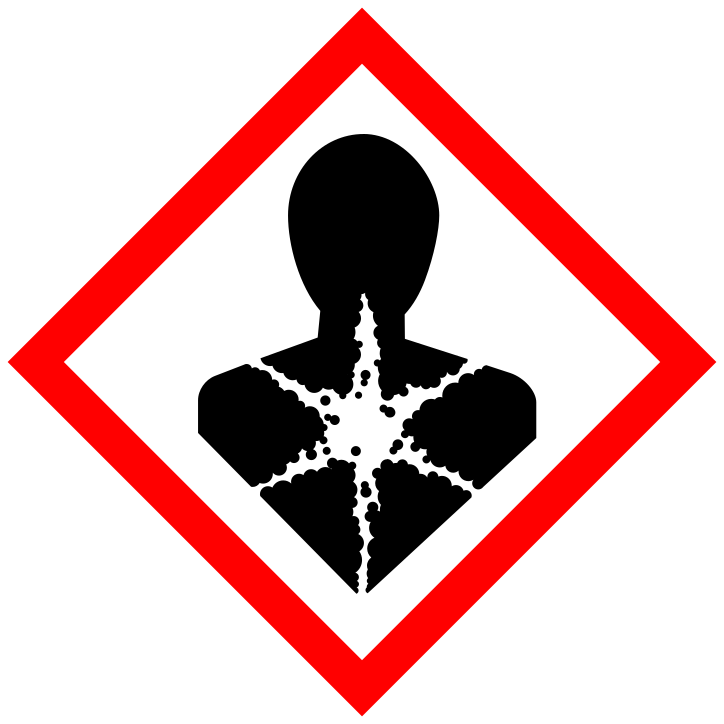
H304: May be fatal if swallowed and enters airways.
Other possible hazards:
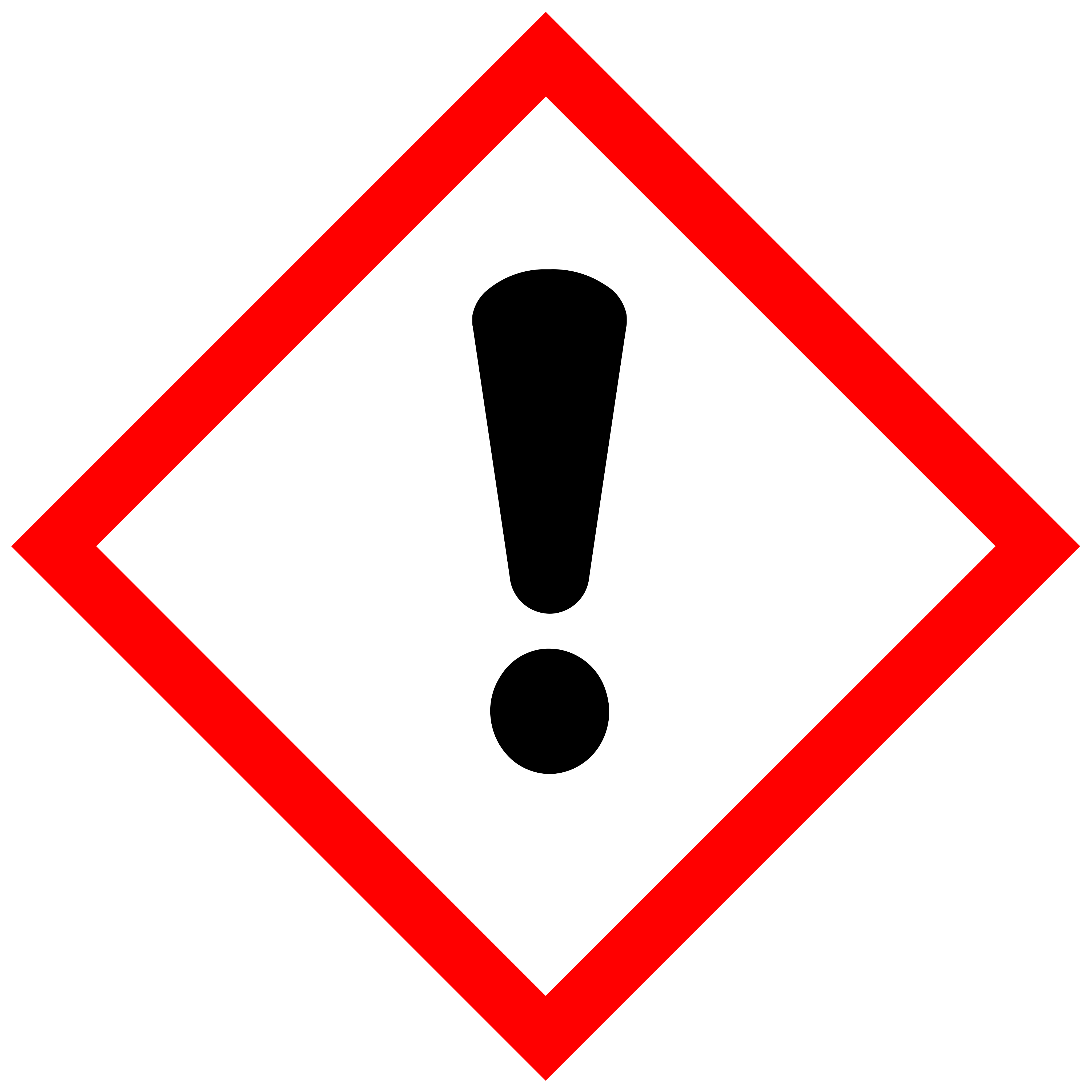
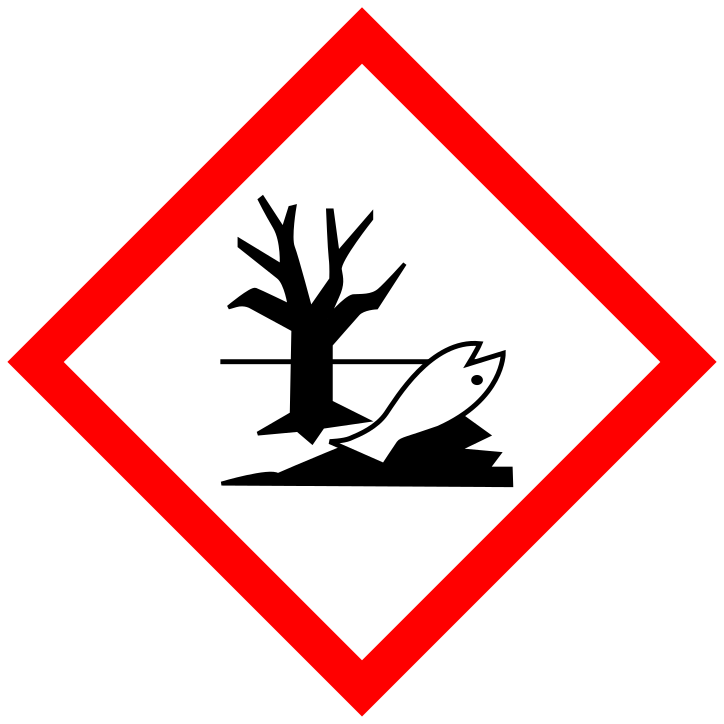
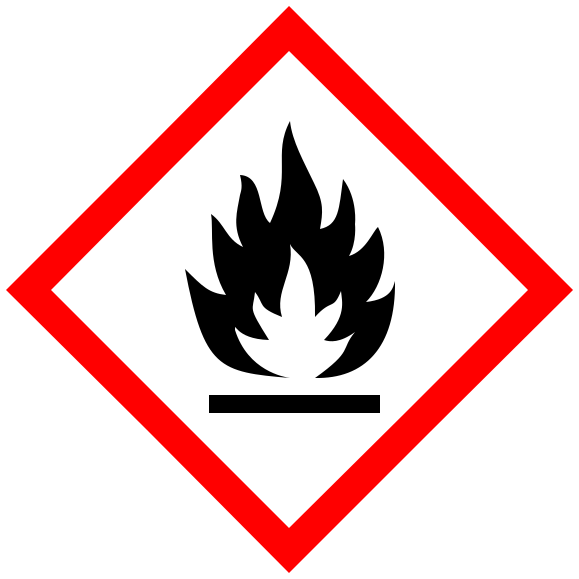
H226: Flammable liquid and vapour.
H317: May cause an allergic skin reaction.
H341: Suspected of causing genetic defects.
H351: Suspected of causing cancer.
H361: Suspected of damaging fertility or the unborn child.
H317: May cause an allergic skin reaction.
H341: Suspected of causing genetic defects.
H351: Suspected of causing cancer.
H361: Suspected of damaging fertility or the unborn child.
Section 3: Composition/Information on Ingredients
Chemical nature: mixture
Chemical nature: mixture
|
Substance
|
Chemical name
|
CAS no.
|
Composition (mass percentage) [%]
|
||
|---|---|---|---|---|---|
|
Desiccant
|
Aluminium Oxide and/or
|
1344-28-1
|
> 90
|
50-90
|
|
|
Zeolite 4A (Molecular Sieve)
|
Silicon Oxide (synthetic)
|
7631-86-9
|
< 60
|
||
|
Sodium Oxide
|
1313-59-3
|
< 40
|
|||
|
Aluminium Oxide
|
1344-28-1
|
< 40
|
|||
|
Magnesium Oxide
|
1309-48-4
|
< 5
|
|||
|
Other
|
-
|
-
|
-
|
||
|
Water
|
Water
|
7732-18-5
|
Up to 35
|
||
|
Lubricating oils, used
|
Complex mix of saturated hydrocarbons
|
70514-12-4
|
< 10
|
||
|
* Lubricating oils, used, distillated
|
Aromatic molecules
|
92045-40-4
|
Possible, but not necesseraly present
|
||
|
* Accumulated Unknown pollutants from air
|
|||||
|
* Depends on the system
|
|||||
Table shows approximate composition. Different compressor oils/lubricants contain different compounds and additives. Lubricants can be mineral (different hydrocarbons) or synthetic (polyglycols, pentaerythritol esters, silicones, polyalphaolephins, polyether polyols, polyaromatics such as naphtalenes and other). Different additives can be present (aromatic amines such as alkylated diphenylamines, benzenamines, other amines, barium sulphonates, naphthyl anilines and other).
Section 4: First Aid Measures
In case of doubt or in the presence of symptoms contact a physician, and show him/her the material safety information. In case of severe symptoms, call your local health care emergency number. Call a poison control center in order to receive toxicological advice for the clinical management of poisoning. Do not administer anything by mouth to an unconscious person.
Inhalation: In the case of respiratory symptoms (cough, dyspnea) move the person to fresh air, place in a semi-seated position, and administer oxygen.
Provide artificial respiration if the person is not breathing.
Ingestion: Seek professional medical attention or send the casualty to a hospital.
Do not wait for symptoms to develop. Do not administer anything by mouth, unless advised to do so by a poison control center. If the patient is vomiting and unconscious, place him/her in the recovery position.
Skin contact: Immediately remove contaminated clothing and flush the skin with copious amounts of water (and soap, if possible) for at least 15 minutes.
Consult a physician if there are symptoms of skin irritation and/or pain.
Eye contact: Remove contact lenses, if present and easy to do. Immediately flush the eyes, kept open, with copious amounts of running water for at least 15 minutes. Consult a physician, especially if there are symptoms of eye irritation and/or pain.
In case of doubt or in the presence of symptoms contact a physician, and show him/her the material safety information. In case of severe symptoms, call your local health care emergency number. Call a poison control center in order to receive toxicological advice for the clinical management of poisoning. Do not administer anything by mouth to an unconscious person.
Inhalation: In the case of respiratory symptoms (cough, dyspnea) move the person to fresh air, place in a semi-seated position, and administer oxygen.
Provide artificial respiration if the person is not breathing.
Ingestion: Seek professional medical attention or send the casualty to a hospital.
Do not wait for symptoms to develop. Do not administer anything by mouth, unless advised to do so by a poison control center. If the patient is vomiting and unconscious, place him/her in the recovery position.
Skin contact: Immediately remove contaminated clothing and flush the skin with copious amounts of water (and soap, if possible) for at least 15 minutes.
Consult a physician if there are symptoms of skin irritation and/or pain.
Eye contact: Remove contact lenses, if present and easy to do. Immediately flush the eyes, kept open, with copious amounts of running water for at least 15 minutes. Consult a physician, especially if there are symptoms of eye irritation and/or pain.
Section 5: Fire-Fighting Measures
Extinguishing Media: Use the most appropriate extinguishing media. Use carbon dioxide, sand, extinguishing powder.
Protective equipment for firefighters: In case of a large fire or in confined or poorly ventilated spaces wear full fire resistant protective clothing and self-contained breathing apparatus (SCBA) with a full face-piece operated in positive pressure mode even because the substance could release H2S, SOx, carbon monoxide and other unidentified organic and inorganic compounds.
Extinguishing Media: Use the most appropriate extinguishing media. Use carbon dioxide, sand, extinguishing powder.
Protective equipment for firefighters: In case of a large fire or in confined or poorly ventilated spaces wear full fire resistant protective clothing and self-contained breathing apparatus (SCBA) with a full face-piece operated in positive pressure mode even because the substance could release H2S, SOx, carbon monoxide and other unidentified organic and inorganic compounds.
Section 6: Accidental Release Measures
Use personal protective equipment specified in Section 8. Ventilate the area. Do not let sample to enter the drains. Collect material, place it in appropriate container and tightly close. Prevent formation of dust and release of gases.
Use personal protective equipment specified in Section 8. Ventilate the area. Do not let sample to enter the drains. Collect material, place it in appropriate container and tightly close. Prevent formation of dust and release of gases.
Section 7: Handling and Storage
Storage: Store in clean, dry and tightly closed containers in cool, dry place.
Handling: Open only in ventilated area. Use personal protective equipment specified in Section 8.
Storage: Store in clean, dry and tightly closed containers in cool, dry place.
Handling: Open only in ventilated area. Use personal protective equipment specified in Section 8.
Section 8: Exposure Controls/Personal Protection
Personal Protective Equipment:
Respiratory protection: Open only in ventilated area. Use respirator with adequate filter (organic vapor cartridge suggested). If there is possibility of presence of inorganic gases use combined filters. Follow Standard EN 14387.
Eye protection: Wear appropriate eyeglasses or chemical safety googles.
Skin protection: Wear appropriate gloves and clothing to prevent skin exposure.
Personal Protective Equipment:
Respiratory protection: Open only in ventilated area. Use respirator with adequate filter (organic vapor cartridge suggested). If there is possibility of presence of inorganic gases use combined filters. Follow Standard EN 14387.
Eye protection: Wear appropriate eyeglasses or chemical safety googles.
Skin protection: Wear appropriate gloves and clothing to prevent skin exposure.
Section 9: Physical and chemical properties
Form: solid
Color: mixture of different colors – from white to yellow to brown, sometimes even grey or black
Ignition Temperature: N/A
Form: solid
Color: mixture of different colors – from white to yellow to brown, sometimes even grey or black
Ignition Temperature: N/A
Section 10: Stability and Reactivity
Chemical stability: Stable in dry, cool atmosphere.
Reactivity: Stable under recommended storage and handling conditions (described in Section 7). In contact with moisture, adsorption occurs and temperature rises. If this happens in closed container, pressure increases.
Keep samples away from water!
Chemical stability: Stable in dry, cool atmosphere.
Reactivity: Stable under recommended storage and handling conditions (described in Section 7). In contact with moisture, adsorption occurs and temperature rises. If this happens in closed container, pressure increases.
Keep samples away from water!
Section 11: Toxicological Information
Samples may contain substances that are harmful or toxic to environment.
Samples may contain substances that are harmful or toxic to environment.
Section 12: Disposal Considerations
Samples must be disposed of as dangerous waste (must not be disposed of as Common Sludges). Waste must be classified and disposed of according to local regulations.
Samples must be disposed of as dangerous waste (must not be disposed of as Common Sludges). Waste must be classified and disposed of according to local regulations.
Section 13: Transport information
Not regulated as a hazardous material for transportation, except when it contains Lubricating oils, used, distillated, CAS: 92045-40-4 or other compounds that are not usually present in air. In that case, special transport shall be provided and is responsibility of sender to provide it.
Section 14: Additional Information
This document contains safety information about samples described above with best knowledge we have. Document is informative and shouldn’t be taken as specification of guarantee. Composition of those samples is difficult to predict, because they can be taken from different systems. Therefore only general information of what is expected to be present is given.